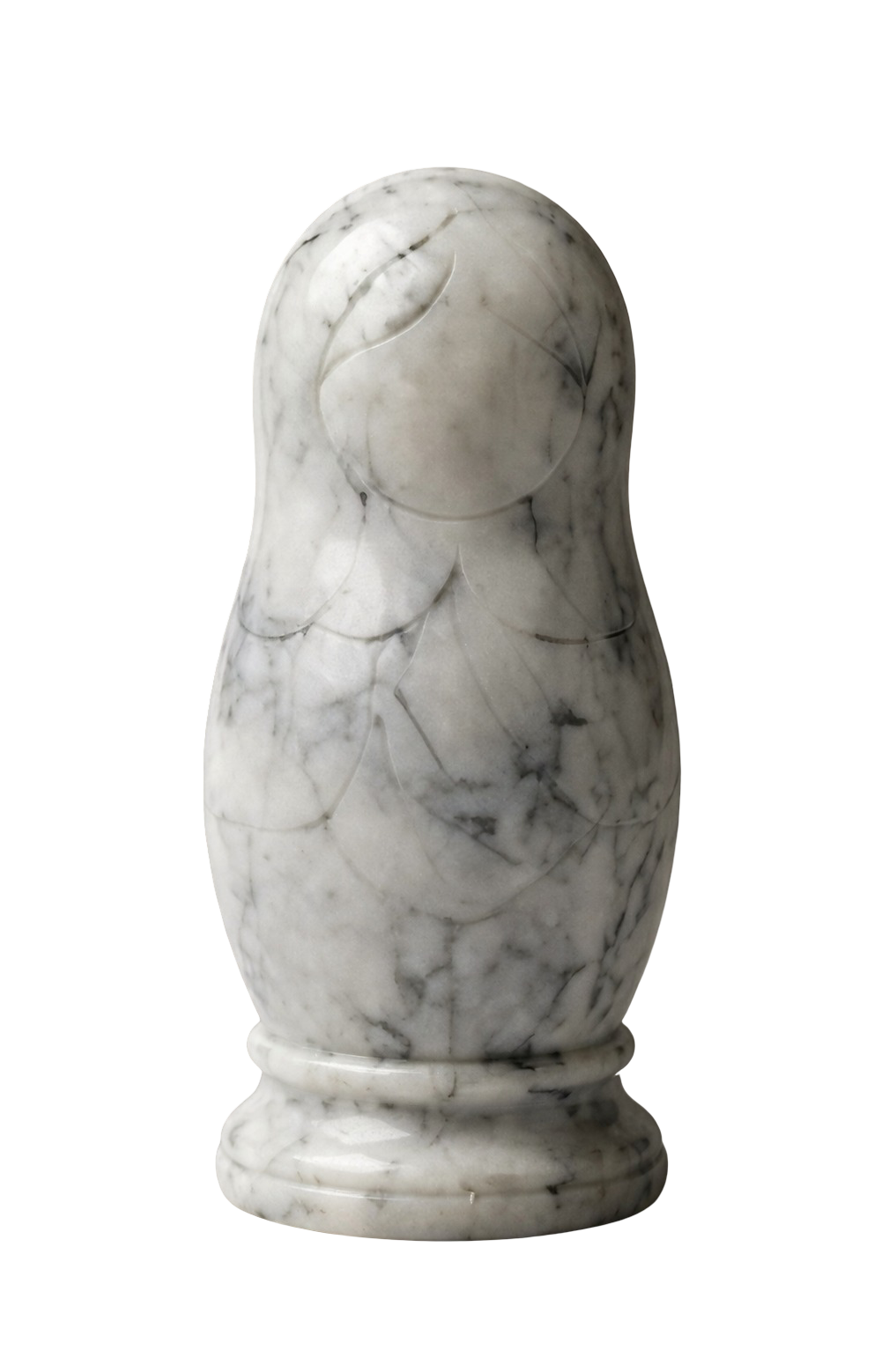
A possibility becomes a world only when something gives it a shape. Before a sentence is written, many sentences could occupy its place; afterwards, one arrangement of words stands on the page, carrying the marks of choices that are no longer visible. We tend to look at the finished thing and forget the field from which it was selected.
This essay is an attempt to keep both in view: the thing that exists and the alternatives against which we recognise it. It begins with a very small imaginary world, introduces an equation, works through its arithmetic, and then asks where the explanation stops. The aim is not to make an enormous claim with a small formula. It is to discover how much a small formula can honestly explain.
Demonstration draft. Written to exercise the essay layout, explanation blocks, mathematics, code and connected graph. The probability model is invented for this example; its assumptions are not established facts about minds or the universe. The cover image was supplied for this demonstration.
Explore the seven connected essays ↓ · The interactive graph follows the essay and references, in the usual place. In reading mode, this link returns you to it.
Begin with a world small enough to count
Imagine a maker arranging a set of blank tiles. Each tile can receive one of two marks: a circle or a line. The marks have no hidden meaning, and neither is preferred. To make the thought experiment precise, suppose that the maker chooses each mark independently and with equal probability.
One tile admits two arrangements. Two tiles admit four: circle–circle, circle–line, line–circle and line–line. The order matters. We are counting arrangements of positions, not simply the number of circles in a bag. Three tiles admit eight arrangements because each of the four two-tile arrangements can receive either mark in its third position.
Now choose one complete arrangement in advance. Perhaps the target is circle–line–circle. Under the rules just stated, its probability is one in eight. The same is true of each other complete arrangement. There is nothing special about our chosen pattern in the arithmetic; its specialness comes from our having named it as the target.
That last distinction matters. An outcome can be individually unlikely without its occurrence being surprising in the relevant sense. Some arrangement must be produced. The probability of our specified arrangement is one in eight; the probability of producing an arrangement at all is one. Confusing those questions is an easy way to turn an innocent calculation into a misleading story.
Key distinction
The probability of this specified arrangement is not the probability that something exists.
Give the choices a branching structure
Instead of laying all the tiles in one row, organise them into levels. Level zero contains one tile. Level one contains two. Level two contains four. Each new level doubles the number of positions. This is a construction rule for our imaginary example, not an observation about how nature is organised.
At level zero there is one decision to match. At level one there are two more. At level two there are four more. To reproduce one specified configuration through level two, the maker must match seven independently chosen marks in total: one plus two plus four. The branches tell us where to count; the probability comes from the separate rule governing the marks.
This is a useful place to return to The Architecture of Thought. That essay treats structure as something shaped through use.[^1] Here we temporarily reverse the direction of inquiry: we prescribe a structure and ask what follows from it. The two approaches can speak to one another, but they are not interchangeable. A prescribed tree does not demonstrate that a mind grows as a tree.
Step 1 — Say what every symbol means
Let Sc be the number of equally likely marks available at each position. In the tile example it is two. Let n name a level, beginning at zero, and let N be the final level included. There are therefore N + 1 levels, not N levels. Let P mean the probability of matching one fully specified configuration of all positions through that final level.
These definitions are deliberately local. The expanded block below follows the dice sequence in the draft chapter “The Scarcity of Existence”: one die, two dice, four dice, and eight dice, followed by the cumulative calculation. We then replace the six possible faces with a general number of equally likely outcomes, Sc. This demonstrates the algebra without treating the manuscript’s later biological analogy as a measured probability of human existence.
Equation · from dice to the general formula
- Begin with one fair die.
Guess one specified face before a single roll. The chance of a correct guess is one in six.
- Double the dice.
For two independent dice, both specified guesses must be correct. Multiply the two probabilities.
- Double again.
Four dice require four matches; eight require eight. These are probabilities for each individual stage, not for the entire sequence.
- Require success at every stage.
Count one attempt at the sequence, with no retries after a failure. Succeeding through stage one requires both the first and second stages to succeed.
- Extend the cumulative calculation.
Through stage two we need seven correct outcomes altogether. Through stage three, we need fifteen.
- Replace six with a general possibility count.
Let Sc be a fixed number of equally likely outcomes per independent trial. At level n there are 2n trials. Call the probability of matching that whole level Cn.
- Multiply the levels.
The product sign ∏ abbreviates C0 × C1 × … × CN. It includes level zero, so there are N + 1 factors. Substituting the expression for each Cn gives the displayed formula below.
- Add the exponents.
Every factor has the same base, so the exponent is 1 + 2 + 4 + … + 2N. Doubling that sum and subtracting the original leaves 2N+1 − 1.
P = N ∏ n=0 ( 1 Sc )2n
"The Scarcity of Existence Equation"
Step 2 — Read one factor before reading the product
At level n, there are 2n positions. One position has a one-in-Sc chance of matching its specified mark. Because the choices in this model are independent, matching all the positions at that level gives the factor (1 / Sc)2n.
The product symbol asks us to multiply those factors from level zero through level N. It does not add their probabilities. A match at one level is not an alternative to a match at the next: the target requires both. The multiplication follows from that joint requirement and our independence assumption.
Step 3 — Work through a complete example
Take two marks and stop at level two. The three factors are 1/2, 1/4 and 1/16. Their product is 1/128. The maker has seven positions to fill, and there are 27 = 128 equally likely complete configurations. Counting the configurations directly and multiplying the level-by-level factors lead to the same answer.
The agreement is a useful check. It does not prove that the model describes reality, but it does show that two ways of expressing the same stipulated counting problem are consistent. Whenever an equation feels opaque, a small case that can be counted by hand is often the best place to begin.
| Final level N | Total positions | Exact P |
|---|---|---|
| 0 | 1 | 1 / 2 |
| 1 | 3 | 1 / 8 |
| 2 | 7 | 1 / 128 |
| 3 | 15 | 1 / 32768 |
Step 4 — Compress the explanation, not the assumptions
The total number of positions is the finite sum 1 + 2 + 4 + … + 2N. Call that total T. Doubling it produces 2 + 4 + 8 + … + 2N+1. Subtract the first line from the second: every middle term cancels, leaving T = 2N+1 − 1. That is the entire derivation; no hidden physical principle has entered.
Because each factor in the product uses the same base, its exponents add. The equation can therefore be written as P = Sc−(2N+1 − 1). The shorter expression is convenient, but the longer explanation tells us what the expression is about. Compression becomes dangerous only when it conceals the premises that made it possible.
Let the explanation become executable
A small program gives the arithmetic another form. The following JavaScript returns the exact fraction as text. It uses BigInt for the denominator rather than dividing two integers and accidentally discarding the fractional part. JavaScript’s integer division truncates, so 1n / 128n would produce 0n, not an exact rational number.[^2]
The input limits are intentional: this is a small teaching example, not an invitation to request an enormous exponent. The program’s validation checks the computational inputs. It cannot check whether independence and equal probabilities are reasonable assumptions about a real situation.
// An exact counting model, not a measurement of how likely a real world is.
// The deliberately long report lines below let you compare horizontal scrolling with soft wrapping while keeping each original source line numbered only once.

function configurationProbability(choices, lastLevel) {
  if (!Number.isInteger(choices) || choices < 2 || choices > 10) {
    throw new RangeError("Use 2 to 10 choices.");
  }
  if (!Number.isInteger(lastLevel) || lastLevel < 0 || lastLevel > 6) {
    throw new RangeError("Use a final level from 0 to 6.");
  }

  const positions = 2 ** (lastLevel + 1) - 1;
  const denominator = BigInt(choices) ** BigInt(positions);
  return { positions, probability: `1 / ${denominator}` };
}

function describeStages(choices, lastLevel) {
  // Validate before allocating the small list of stages.
  const complete = configurationProbability(choices, lastLevel);
  const stages = [];
  let cumulativeDenominator = 1n;

  for (let level = 0; level <= lastLevel; level++) {
    const positionsAtLevel = 2 ** level;
    const stageDenominator = BigInt(choices) ** BigInt(positionsAtLevel);
    cumulativeDenominator *= stageDenominator;

    stages.push({
      level,
      positionsAtLevel,
      stageProbability: `1 / ${stageDenominator}`,
      cumulativeProbability: `1 / ${cumulativeDenominator}`,
      explanation: `Level ${level} adds ${positionsAtLevel} independent positions with ${choices} equally likely choices each; matching the entire sequence so far has exact probability 1 / ${cumulativeDenominator}.`,
    });
  }

  if (`1 / ${cumulativeDenominator}` !== complete.probability) {
    throw new Error("The stage product and the geometric-series calculation disagree.");
  }

  return { ...complete, stages };
}

function formatExperiment(choices, lastLevel) {
  const experiment = describeStages(choices, lastLevel);
  const heading = `A specified configuration through level ${lastLevel}: ${experiment.positions} positions, ${choices} choices per position, exact probability ${experiment.probability}.`;
  const assumptions = "Assumptions: all positions are independent, all choices are equally likely, the target is fixed before the trial, and no retries are included in the calculation.";
  const details = experiment.stages.map(stage => stage.explanation);

  return [heading, assumptions, ...details].join("\n");
}

// Reproduce the four worked values in the essay's table.
for (let level = 0; level <= 3; level++) {
  console.log(configurationProbability(2, level));
}

// Then inspect the dice example, including every cumulative step.
const diceReport = formatExperiment(6, 3);
console.log(diceReport);
The first four outputs contain 1, 3, 7 and 15 positions, with the four fractions in the table. A second report walks through the dice example, checking the stage-by-stage product against the shorter formula. Changing the number of choices changes the denominator; changing the last level changes the number of positions. Those are different interventions. Keeping them separate makes it easier to understand what an experiment with the code actually tests.
A small exercise: change one assumption
Keep three positions, but let every position copy the first. There are now only two complete configurations, not eight: all circles or all lines. A mixed target is impossible. An all-circle target has probability one half. The geometry has not changed; the dependence between choices has.
Where the model stops being the world
The copying exercise exposes the strongest assumption in the original calculation. Independence was not a decorative word. It was doing mathematical work. If later choices depend on earlier ones, the same-looking arrangement of positions may support a very different distribution of outcomes.
Equal likelihood matters too. If circles are favoured, a configuration full of circles is no longer as likely as a configuration full of lines. If different positions allow different sets of marks, one constant Sc is no longer an adequate description. If many configurations count as success, we must specify that set of successful outcomes rather than quietly substituting one exact pattern for it.
None of these objections makes the toy calculation useless. They tell us what would have to be checked before transferring it. A model is valuable partly because it lets us see the cost of changing a premise. It becomes misleading when its tidy notation is mistaken for evidence that those premises hold.
The companion essay A Map Is Not a Mechanism stays with that boundary. It asks what a diagram can reveal without pretending that a drawing of relationships is already an explanation of their causes. This is also why the network below should be read as a network of essays, not as a diagram of a brain.
Read the argument as a connected graph
An essay offers a path through an idea. A graph offers ways to leave that path and return with a different question. The distinction is useful here: the main explanation can remain continuous while a companion note gives an objection room to breathe.
This essay links back to “The Architecture of Thought” on Branch Press and connects locally to “A Map Is Not a Mechanism.” The local companion leads to The Use of an Unfinished Note. That second companion is deliberately a second-degree connection in the graph. A link in the prose helps a reader navigate; the explicit connection recorded in the essay’s metadata is what draws a graph edge in this implementation.
Use the graph’s depth selector to compare one, two, and three degrees. At one degree, the immediate conversation includes the map essay and When Feedback Changes the Question. At two, it reaches writing, language, and the limits of a model. At three, the two branches meet in an essay about incomplete evidence. The five discipline colours distinguish cognition, systems, language, philosophy, and ethics; the additional tags give each essay a more specific description. Every node is an actual short essay you can open and read.
Leave room for another arrangement
The most interesting result of the tile experiment is not the small probability at its end. It is the habit of asking a more careful question at its beginning. What is being counted? Which outcomes count as the same? What makes the choices independent? Was the target named before the result was seen?
Writing benefits from a similar patience. Before calling an idea inevitable, examine the decisions that made it look so. Before calling it impossible, ask whether the imagined alternatives were unnecessarily narrow. A finished paragraph can be both the outcome of constraint and the beginning of a new possibility.
The marble figure on this page offers an image for that tension: a definite outer form that suggests other forms within it. The image is not evidence for the equation. It is an invitation to look again at the relationship between what has taken shape and what we can still imagine.
A useful explanation gives an idea a shape without pretending that the shape contains the whole world.